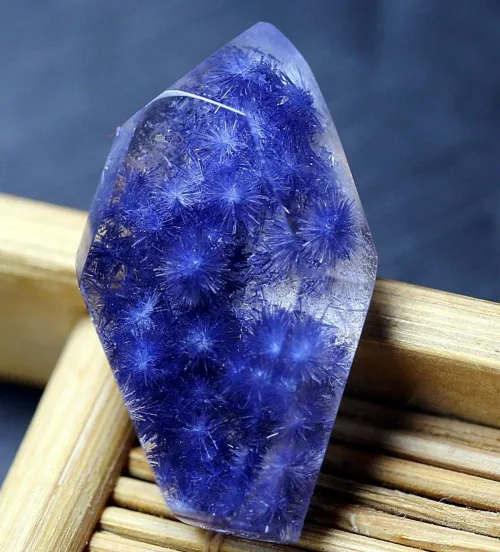
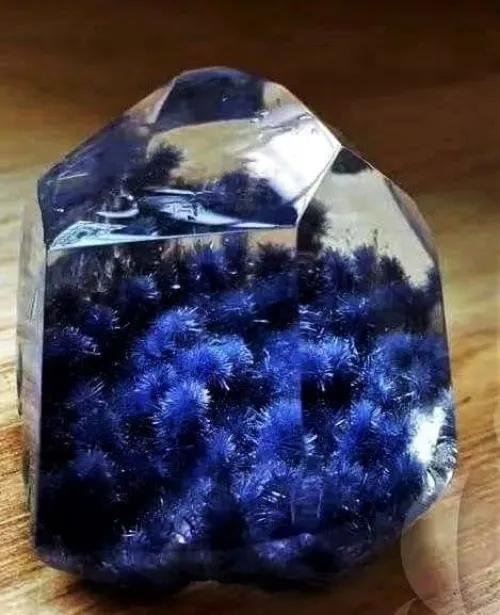
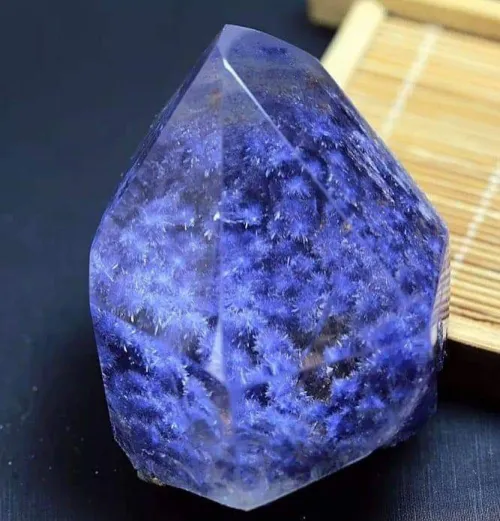
Imagine holding a rock fragment that transforms mid-air—blue bands shifting like ocean tides under sunbeams, crystalline facets revealing hidden dimensions. You might pause, wondering if this geological marvel whispers secrets older than human consciousness. Perhaps kyanite feels like that quiet mentor who appears precisely when we're navigating uncharted territories in life. Its layered structure mirrors our own complexities, reminding us that strength manifests differently across varied circumstances. So whether you're a curious spirit, a geology enthusiast, or simply drawn to Earth’s natural artistry, come explore this magnificent mineral and its untold stories.
This passage will be explored at:
- Physical Composition
- Natural Formation
- Practical Applications
- Visual Characteristics
- Maintenance Guidelines
- Long-Term Durability
- Value Considerations
- Common Misconceptions
Physical Composition
Picture holding a mineral that defies conventional expectations—its resistance shifting beneath your fingers like mood rings responding to temperature. The moment kyanite leaves its rocky cradle and enters your hands, you're touching millions of years of terrestrial storytelling. Why shouldn't something so ancient still resonate with modern seekers?
To understand **what kyanite is made of**, look to its foundational chemistry. Beneath those captivating surfaces, this
aluminum silicate **primarily consists of aluminum oxide (Al₂O₃) and silicon dioxide (SiO₂)**, forming a specific aluminosilicate framework (Al₂SiO₅) that challenges geological predictability. More astonishingly, its unique personality emerges through what scientists call
anisotropy—where
hardness diverges dramatically across different crystal facets due to this distinct atomic arrangement. Some orientations may yield like soft graphite while adjacent planes rival quartz in resilience. Doesn’t this beautifully mirror how our own perceived softness and strength coexist harmoniously?
Close your eyes and visualize Earth’s alchemy lab—buried landscapes folding like origami beneath tectonic pressures, mineral soups simmering at precise temperatures. In these hidden crucibles, kyanite
emerges only under exacting conditions. Think of transitional moments when metamorphosis beckons you toward new beginnings.
Most specimens are
found to emerge
in metamorphic rocks under medium-pressure conditions—requiring pressure-temperature balances comparable to life’s turning points. At approximately 400-700°C, aluminum-rich minerals undergo molecular recompositions without fully melting. The fact that transformation happens without dissolution—much like personal growth preserving core identity—surely makes creation feel intentional.
Practical Applications
Could Earth offer better metaphors for resilience? When industrial processes demand materials that won’t falter amid fire and pressure, kyanite enters quietly. Similar to how supportive souls anchor us during turbulent chapters. Discover more about
what kyanite is used for in modern applications.
Thanks to an exceptional heat resistance nearing 1800°C, this mineral becomes indispensable in furnace linings where lesser substances fail. Foundries rely on kyanite-based molds for casting because thermal stability allows repeated metal-pouring cycles. Isn't it poetic how something birthed in ancient pressures now helps shape innovations? Though invisible in finished spacecraft components or smartphone chassis, its endurance whispers through engineering.
Visual Characteristics
Observe how lighting dances across **kyanite as a
gemstone**—velvet blues shifting between pale dawn tones to twilight ocean depths. Each crystal seems to capture atmospheric phenomena, inviting us to pause in appreciation. Doesn't such natural artistry remind us to cherish fleeting moments?
Chromatically, kyanite generally displays blue coloration ranging from cyan to navy due to titanium traces in its lattice, a key factor in its desirability as a collector's item. Its transparency levels form a spectrum—some windows into soulful depths, others presenting as translucent veils or opaque mysteries. And those signature bands? They emerge parallel to crystallographic axes, creating visual poetry resembling liquid horizons, a hallmark of the uncut **kyanite gemstone**. The universe, it appears, has always understood art.
Maintenance Guidelines
Consider this: how we care for precious things reflects inner reverence. Your ceremonial kyanite piece deserves the tender attentiveness you'd offer a fragile epiphany. Simple mindfulness preserves connections.
For cleaning, use lukewarm water with mild detergent and soft microfiber—safeguarding surfaces against micro-scratches. Never scour vibrant bands. When storing, place pieces in separate padded containers, preventing collisions with other gems' harder edges. Think protective kinship—each mineral nestled in cocooned peace.
Long-Term Durability
Time’s passage transforms even diamonds to dust—yet Earth’s gifts show astonishing defiance. In museums, you encounter kyanite siblings formed before Pharaohs drew breath. What might we learn from such persistence?
When shielded from harsh treatment, this mineral’s lifespan typically exceeds decades under standard conditions. Though surprisingly gentle against acids, its endurance surfaces elsewhere—color retention persists through prolonged UV exposure like steadfast loyalty, a valuable trait for any displayed specimen. Such stability feels sacred in our disposable era.
Kyanite‘s Whisper to Your Spirit
Curious about what kyanite does on a spiritual and practical level?
Why encounter this mineral without embracing its symbolic resonance? Those layered blues reflect both ocean-depth mysteries and sky-bound aspirations. They remind us that clarity emerges differently across life’s facets—sometimes through softness, other times through immovable conviction. When pressure mounts, might kyanite’s emergence from metamorphic forces inspire courage? Take a silent moment today—hold any crystal—to honor your own transformative journey.
Value Considerations
How does anyone assign worth to earthly magic? Beyond carat weights, consider the wonder it evokes—that breathlessness when refracted light conjures inner constellations. The value of a **kyanite gemstone** is assessed through a lens that blends science and aesthetics.
Valuation often centers on color saturation and clarity distinctions. Collector-grade treasures, those that define a premium **kyanite gemstone**, usually exhibit lapis-like richness with minimal inclusions, commanding premium prices if exceeding 5 carats. But more profoundly—authenticity matters. Ethical provenance amplifies meaning, transforming possession into communion with the planet.
Common Misconceptions
Beware oversimplification—especially with marvels embodying geological nuance. Some confuse kyanite for sapphire siblings, missing its singular narrative entirely. Truth reveals layered dimensions.
Unlike synthetic counterparts,
natural specimens maintain unique optical signatures under polarized light—authenticity markers visible to specialists. Identity is further proven through
distinct cleavage along dual angles near 30° and 85°—an angular fingerprint unlike other silicates. Such complexity defies duplication. Perhaps it whispers: embrace your own irreplaceable geometry. This is just one reason
what kyanite is known for goes beyond geology.