Is Kyanite A Silicate?
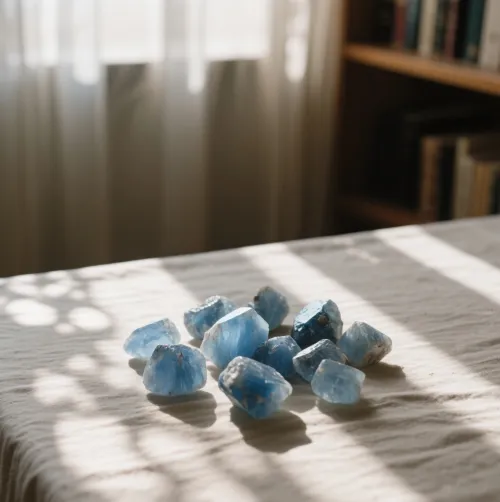
Have you ever run your fingers over that captivating blue streak in metamorphic rock and wondered about its silent story? Well, let’s clear something up right away—yes, kyanite belongs to the silicate family. But why should that matter to you? Think about it: every shimmering mineral tells an ancient tale of transformation. That stunning blue? It isn’t random beauty. It’s Earth’s artistry forged through pressure, whispering secrets about resilience. Maybe you've felt it too—how nature crafts strength layer by layer, hinting that even solid rock bends before it finds its true form. Let’s uncover why this question about kyanite isn't just about chemistry but about recognizing the hidden connections beneath our feet.
This passage will be explored at:
- Mineral Group Classification
- Chemical Composition Structure
- Identification Methods and Testing
- Physical Properties and Indicators
- Preservation Best Practices
- Industrial Applications and Value
- Common Questions Clarified
Mineral Group Classification
When you hold certain rocks from mountain belts, that blue wonder you notice—kyanite—reveals its true identity. It sits quietly within the nesosilicate group, a part of the silicate family like a solitary dreamer holding wisdom. Its structure? Isolated tetrahedra standing apart yet bound together… much like those moments when we stand alone yet feel connected to something larger.
At some point, we recognize patterns. This mineral forms mainly in schists or gneisses under immense pressure, crystallizing beautifully when conditions exceed 4 kbar. Why does this classification matter? Because seeing kyanite’s true nature helps you read Earth’s silent messages—how pressure shapes beauty, how isolation creates unique strength. It’s a gentle nudge to honor your own transformations.
Chemical Composition Structure
Look at kyanite’s essence: its chemical formula is Al₂SiO₅. Those oxygen-linked silicon tetrahedra confirm it as a silicate. But you feel it too—structure defines existence. When silicon-oxygen bonds create stability, they mirror how we build foundations in our lives.
The thing is, trace iron within its structure gifts it that mesmerizing blue… as if chance imperfections create the most stunning hues in nature. Just like how our perceived flaws become strengths. And those Si-O bonds? They’re detectable via infrared spectroscopy, showing strong signatures near 900–1100 cm⁻¹. But beyond science, ask yourself—what invisible bonds hold your resilience together?
Identification Methods and Testing
So how do you know it’s truly kyanite? The universe loves giving clues if we pay attention. X-ray diffraction reveals its triclinic crystal heart—distinctly silicate. Meanwhile, its weight whispers truth: specific gravity of 3.53–3.65 differs from carbonates by a meaningful 0.8–1.2 g/cm³. That measurable gap isn’t just about density… it’s about recognizing unique identity.
Ever notice how things reveal themselves under pressure? Kyanite’s hardness changes drastically when tested in different directions—4.5 one way, nearly 7 another. This anisotropy reflects how we too might feel softer facing certain challenges, only to find hidden strength elsewhere. Why not test your own angles when faced with life’s pressures?
Physical Properties and Indicators
Gaze at kyanite’s glassy surface where light dances like dew… that surface carries vitreous to pearly luster, a quiet affirmation of its silicate nature. But what speaks loudest is that perfect cleavage along one plane, exposing weaker bonds between silicate chains beneath the strength.
Do you see the lesson here? Our apparent vulnerabilities are often just pathways to deeper alignment. The blue hue? Not random. It traces back to iron interlacing an aluminosilicate framework. Such nuances matter—they’re Earth’s pigment choices. Maybe your own "color” comes from embracing the unexpected elements within.
Preservation Best Practices
How do we honor such resilient beauty? Protect kyanite from harsher companions. Store it away from quartz or topaz which might scratch its essence—it’s like safeguarding fragile confidence between sturdy energies.
And skip ultrasonic cleaning. Those vibrations risk pulling apart cleavage planes along atomic weak points… think of how life’s noise can shake unseen connections. Instead, gentle care preserves integrity. But even its resistance carries wisdom—while acids barely etch its surface, prolonged exposure leaves marks. What reminders might surface about boundaries you hold?
A Thoughtful Experiment
Try this: For seven days, carry a kyanite piece. Notice two signals each day—how its temperature changes against your skin, how light shifts its color. Are these coincidences, or soul echoes?
Industrial Applications and Value
Kyanite doesn’t just exist… it serves. In refractory ceramics, its silicate backbone endures up to 1100°C—offering thermal stability we’d all wish for during fiery trials. Yet in porcelain production, industrial-grade kyanite subtly lowers sintering temperatures by 100–150°C. Imagine quietly helping others achieve transformation with less burning… doesn’t that inspire?
Value links to authenticity. Clearer crystals with deeper blues hold steady worth—but deposits dwindle. We may need aluminosilicate alternatives someday. Here’s the quiet nudge: scarcity emphasizes how moments matter. Are you making space for what truly shines?
Common Questions Clarified
How reliable is kyanite’s silicate confirmation?
Highly reliable. Atomic structure reveals isolated silica tetrahedra—classic nesosilicate behavior. Its X-ray and infrared signatures match too.
Why avoid ultrasonic cleaning specifically?
Structural vibrations exploit weaknesses along cleavage planes. Gentle wiping causes far less risk to its integrity.
Does color indicate silicate properties?
Not directly! The blue comes from iron traces within the aluminosilicate framework—an added grace note on deeper composition.
How does it appear in nature?
Find its grace in mountain belt schists or quartz veins—spaces where pressure sparked silent crystallization.