Is Kyanite Dangerous
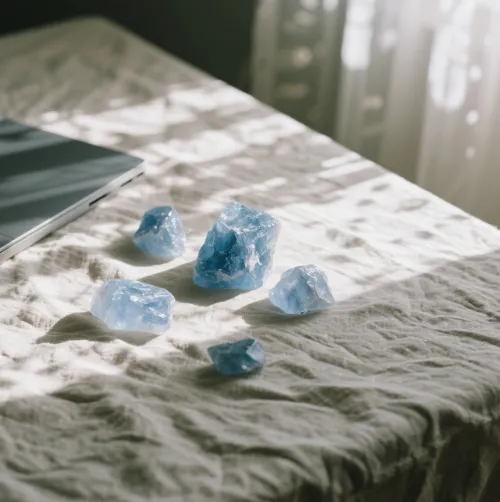
Have you ever held a piece of kyanite? That striking blue mineral seems almost too beautiful to be anything but harmless—but then again, nature often surprises us. When my friend first handed me those shimmering blue blades from their collection, I remember instinctively worrying, "Is this stuff actually safe?" That sudden hesitation caught me off guard. We interact with geological materials more than we realize—in countertops, jewelry workshops, or even industrial settings—and understanding their nature becomes vital. So... let's explore together this curious question about our blue mineral friend. Maybe we'll discover that true safety lies not in avoiding stones, but in knowing how to walk with them wisely.
This passage will be explored at:
- Safety Introduction
- Primary Hazard Identification
- Safe Handling Procedures
- Risk Recognition Signs
- Long-Term Storage Care
- Durability and Cost Efficiency
- Common Misconceptions
Safety Introduction
Picture yourself in a workshop surrounded by glittering minerals—each piece singing its own geological song. Among them rests kyanite, beautiful as frozen ocean waves caught in stone form. At first glance, it appears serene, yet wisdom begins by listening beyond surface appearances. The journey into safety always starts with respect for nature's creations.
Consider this: **the mineral presents low risk during routine handling under standard environmental conditions**. That means when you're carefully examining specimens in controlled settings, the earth's gift remains gentle. Still, just like ocean waves hold hidden currents, certain transformations deserve attention. Think of kyanite as a teacher—offering lessons rather than warnings when we approach with mindful presence.
Primary Hazard Identification
Visualize cutting a piece for your jewelry project—the moment the blade meets the mineral surface. Suddenly, tiny stars of particles dance in the workshop light... beautiful, yet carrying hidden truths. This is where understanding becomes your most precious tool.
That dust formation from fracturing? **It may cause respiratory irritation if particles are inhaled**—like whispering reminders that not all beauty should be breathed in deeply. Similarly, its elegant structure holds surprises: **cleavage patterns can lead to sharp edges**, almost like nature's origami unfolding. Such moments serve as gentle invitations to pause and honor boundaries within our creations.
Safe Handling Procedures
The Embrace of Protection
Imagine gifting yourself with gloves before handling—turning preparation into a ritual of self-care rather than burden. Every artist knows that loving the material means loving your own hands too. **Protective glove use during manipulation** transforms handling into conscious partnership.
The Elemental Wisdom
Water becomes an ally here—**moist environments can diminish dust dispersion risks when cutting or shaping**. Think of it as creating harmony between stone and element, reducing airborne particles while enhancing connection. Such practices echo deeper truths about working gently with life's sharp edges.
Sealed Guardianship
After work comes restoration: **storage in sealed containers prevents unintended particulate release**. This simple act becomes a bridge between action and rest—honoring both your workspace sanctuary and the mineral's natural properties. Why not frame such care as devotion rather than duty?
Long-Term Storage Care
Years pass and your carefully stored materials await their purpose—hidden gems in life's ongoing creation. Longevity asks more of us than quick solutions; it demands thoughtful guardianship through shifting seasons.
The good news? **Material stability tends to reduce frequent replacement needs over extended periods**, making your stewardship sustainable. **Durability testing indicates long service life without significant material breakdown**. See time as your ally here—allowing value to unfold rather than diminish.
Risk Recognition Signs
Silent Signals in Spaces
Notice how industrial environments feel different than studios? **Industrial settings require particle filtration systems to minimize airborne exposure**. These spaces teach us that air has texture—and honoring that subtlety keeps workplaces breathing with life.
Movement Awareness
Ever observed how particles move like dust-devils in sunlight? **Laboratory assessments simulate abrasive scenarios to gauge airborne particulate generation**. By visualizing their patterns, we transform awareness into protection strategies.
The Breathing Connection
When tasks require closeness—that moment when breath meets craft—**personal protective equipment includes respirators where particulate matter is present**. This isn't about fear, but reverence: breathing being life's most constant prayer.
A Gentle Invitation
Would you pause during your next mineral project to observe handling as a mindfulness practice? Notice how preparation rituals affect your energy, and discover safety as fluid wisdom rather than rigid rules.
Durability and Cost Efficiency
Over seasons of use, your faithful kyanite pieces continue serving—silent companions through countless projects. **Structural integrity remains robust under mechanical stress when handled properly**, revealing how resilience blossoms from consistent care. **Long-term value may stem from reduced hazard management costs compared to alternatives**—an elegant reminder that foresight cultivates abundance.
Here's perspective: **cost-benefit analyses often support investments in dust control measures for operational safety**—but reframe this as planting seeds that grow into protective forests. When we honor materials properly, they gift us with longevity whispering, "See how far we've journeyed?"
Common Misconceptions
Is kyanite toxic like asbestos?
**Comparative studies show lower toxicity profiles than certain silicate compounds**, though sensible protections still apply. Differences matter deeply—this isn't about labeling danger, but recognizing individuality.
Will kyanite spontaneously become hazardous over time?
**Documented health incidents are rare when established safety protocols are followed**. Stability persists in stored specimens, much like wisdom held in stillness through changing seasons.
Does proper care require expensive systems?
**Design features like encapsulated processing units can isolate hazards effectively**, with costs balancing thoughtfully against outcomes. Remember: valuing safety expresses self-worth, not burden.